
Flint Previous Residents Sources
A backward address search uses more than one Flint record trail. Start with the current parcel and deed reference, then move to the Register of Deeds for the transfer history. City directories add an address listing, while census schedules add a household snapshot. Sanborn maps add a physical-place check. The source sequence changes with the period under review. A present parcel card is useful at the start, but a parcel card does not establish every person who lived at the address.
| Source | Years It Covers | Where Held | What It Shows |
|---|---|---|---|
| Register of Deeds ordinary online index | Since 1985 in the FAQ wording; the search page says records before 1983 are unavailable online | Genesee County online-records search | Indexed recent instruments, parties, document types, and dates. Test 1983 to 1984 separately. |
| Register of Deeds historical books | 1736 to 1772 images exist but are not indexed; counter research reaches to the 1800s | County office, historical index path, and subscription route | Grantor and grantee entries, liber or page, document number, and image navigation. |
| Flint city directories | 1890s to present in FPL's broad description; specific leads from 1885 through 1945 | FPL, NARA reference, and licensed databases | Name or address presence, spouse, occupancy, and business clues. Exact shelf years require confirmation. |
| Federal census | 1880 onward, subject to the federal 72-year release rule | FPL microfilm, NARA, and licensed databases | Household structure, age, relationship, birthplace or ancestry, and enumeration geography. |
| Sanborn maps and aerial material | Sanborn examples 1886, 1892, 1898, 1902, 1909, and 1914; Flint aerials identified for 1971 | Library of Congress, FPL, Michigan Digital Sanborn, and local collection | Lot, building, street, and structure context, not an occupant list. |
For an old Flint address, begin with the record closest to the period. Recent transfers may start in the online index. Earlier records need the counter, historical books, mail request, FPL resources, or an archival catalog. Keep a source log with the address form, parcel number, legal description, recording date, and document reference.
Flint Deed Record Starting Point
Three identifiers make the Flint address trail more stable: the situs address, the mailing address, and the parcel number or legal description. The situs address is the parcel's physical location. A mailing address is where correspondence goes and may differ. The legal description and parcel number are especially important when an old deed uses a lot and block or metes-and-bounds rather than a familiar street number.
Use the City of Flint property gateway or the Genesee Parcel History Database to locate the current parcel and available deed reference. The county database offers municipality selection, tax-map, deed-information, owner-name, and address modes, plus map, report, and tax-map links. Its stated weekly update cycle is informational, not a guarantee that every current field is complete. Record the municipality and legal description before assuming a Flint mailing label establishes city jurisdiction.
A current property card can lead to a deed reference. It cannot identify every past household. Keep ownership evidence separate from directory and census evidence for people who lived at the property.
Flint Previous Residents Deed Trail
The Genesee deed chain runs backward from the most recent transfer. Once the parcel and legal description are recorded, open the current purchase deed reference. The deed identifies a seller and buyer, the recording date, and may show consideration or tax information, a legal description, and a reference to an earlier instrument. Search the seller as the prior grantee, then repeat the same legal-description check. A matching legal description is stronger than a street-number match when an address has changed.
- Record the Flint parcel number, legal description, situs address, current owner, and mailing address from the property or parcel-history record. Do not substitute the mailing address for the situs address.
- Open the referenced purchase deed in the Register of Deeds index and save the recording date, document number, and any liber or page reference.
- Identify the seller, who is the grantor on that deed, then search that person as a grantee to locate the earlier acquisition.
- Compare the legal description on the older instrument. If it matches, preserve the new document, liber, or page reference and repeat the loop.
- When the online trail stops, take the saved year, party name, letter, book type, document number, and legal description to the office terminal, historical books, mail request, FPL, or archive route.
- Grantor
- The party transferring an interest in a recorded instrument, commonly the seller in a deed transaction.
- Grantee
- The party receiving that interest, commonly the buyer. In a backward search, a prior seller may be found as the grantee on an earlier deed.
- Chain of title
- A sequence of recorded transfers tied to the same property. It is built from documents, not from a name alone.
- Legal description
- The lot, block, metes-and-bounds, or other formal land description that helps keep the research attached to the same parcel.
Note: Preserve each document, liber, or page reference before moving to another link in the chain.
Flint 1983 1985 Record Gap
The Genesee County Register of Deeds uses two official descriptions that must both be retained. Its online-records page says records before 1983 are not accessible online. Its FAQ describes the ordinary online index as documents recorded since 1985. Use 1985 as the advertised online-index starting point, but test 1983 and 1984 separately rather than declaring a missing web result to be a missing deed.
The Register of Deeds FAQ describes online and counter access, genealogy limits, copy access, office terminals, and in-office research that reaches to the 1800s.
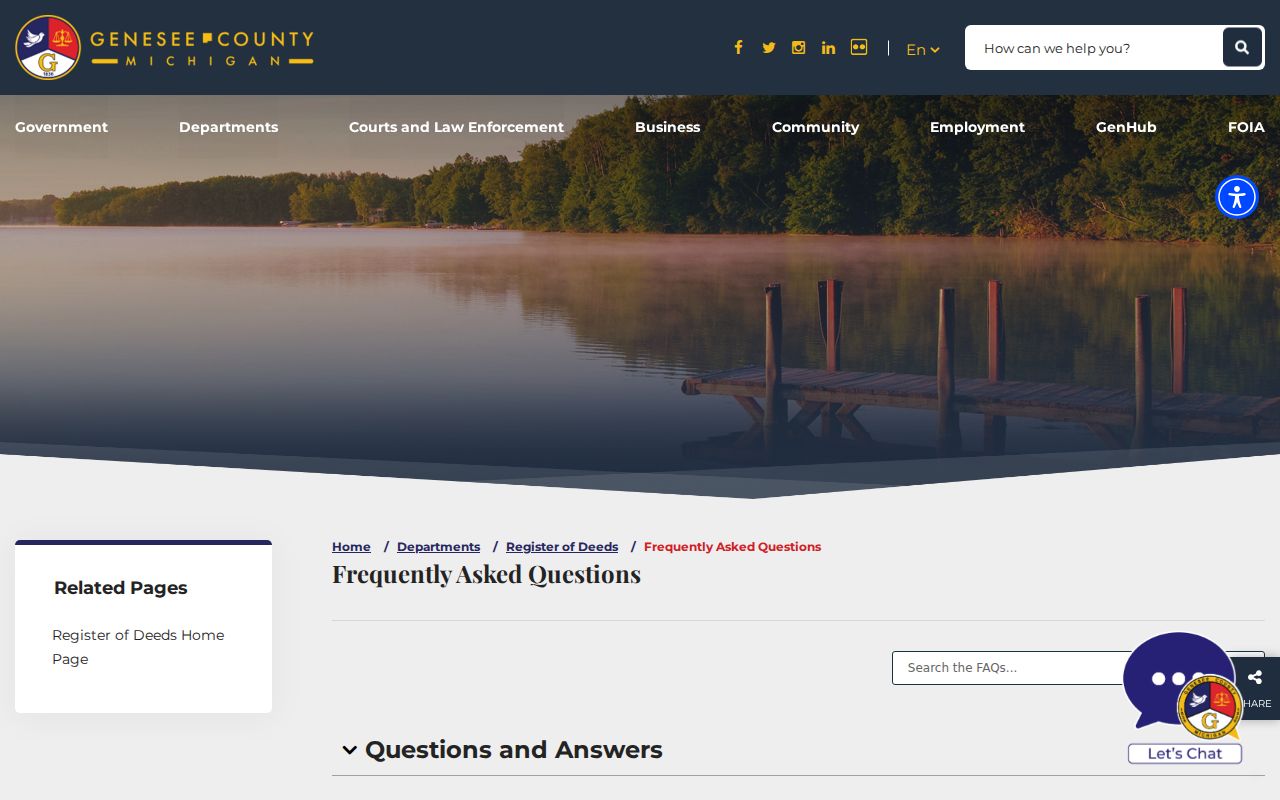
Use the counter or free public computer terminals when the online index does not produce a record. A written mail request should include the recording information and applicable fees. Historical books, FPL microfilm, Archives finding aids, and the FamilySearch catalog are further routes when the online trail ends. Do not treat an online omission as a conclusion about a Flint property.
Flint Historical Records Route
Genesee historical deed and mortgage books are organized by year and surname letter. Under the historical search method, selecting the document type as Index enables book searching. Narrow the year and first letter, open the image icon, use next page or Go-To page navigation, and keep the search screen open so the liber or page and document number can be captured. Search grantor and grantee labels separately. The book-type examples include DE for grantor and grantee, DEGR for grantor only, DEGE for grantee only, and MTG for grantor and grantee.
The oldest book is not always the oldest searchable name. The 1736 to 1772 books have images but are not indexed. That is a useful Flint records story because it changes the method, not the value of the material. A name search may fail even though page images exist. Year, first letter, and book navigation become part of the research process.
The Register of Deeds page identifies a single-name LandRecords search at $8.75, while copies and certified copies follow the office service path. The published fee schedule is the current source to check before ordering a copy or certification.
The Register of Deeds fee schedule shows the office's published copy and recording fee reference.
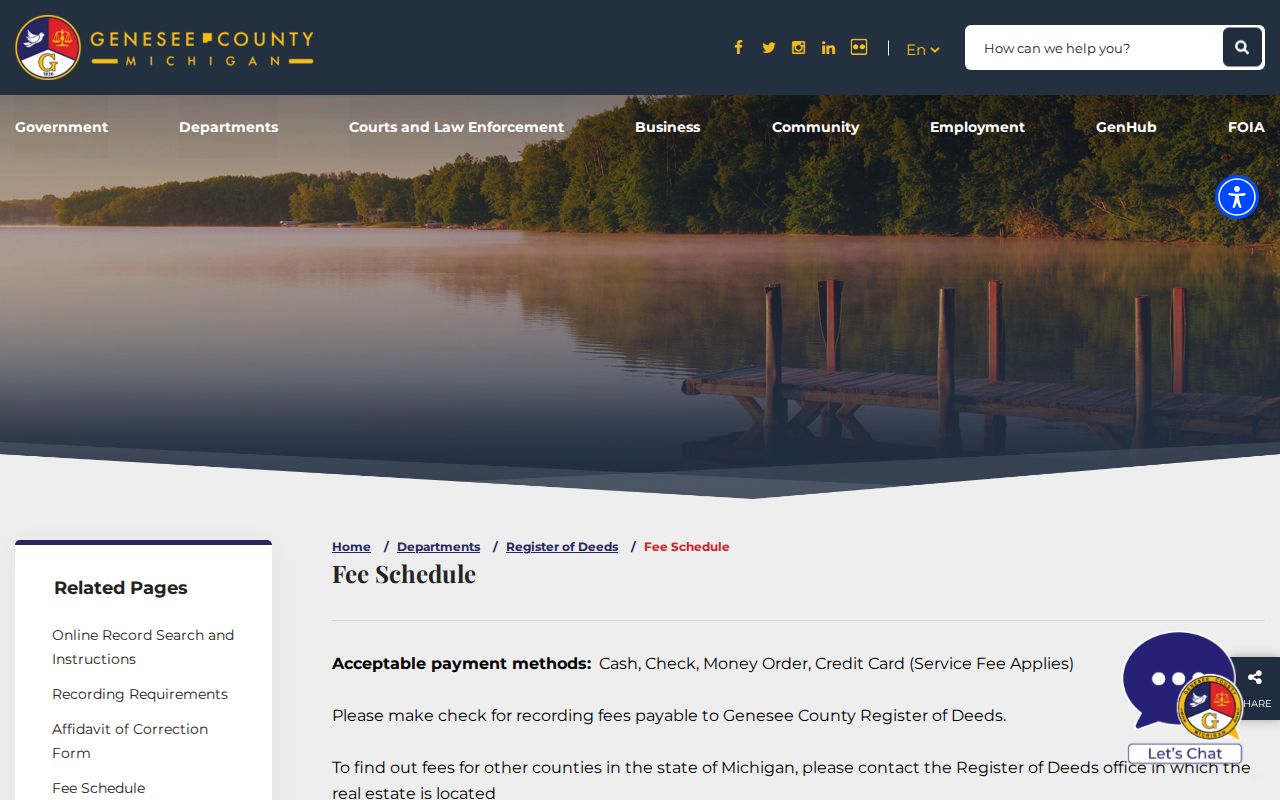
Fee information helps plan a request, but it does not replace the historical index work. Bring the party name, approximate year, book type, letter, legal description, and every document reference already found.
Flint Previous Residents House History
The Flint Public Library house-history guide lays out a local path rather than a single database. It points to Polk directories, Sanborn film, bird's-eye views, Genesee plat maps, city street maps, 1971 aerial photographs, county histories, the Historic Homes Binder, the Genesee County Biography File, census microfilm, Register of Deeds records, and Treasurer microfilm. Start with the current address and a neighboring address, locate the lot in a Sanborn or plat, and retain every earlier street or number form.
The FPL house-history path gathers Flint sources that help connect a deed trail to a physical address.
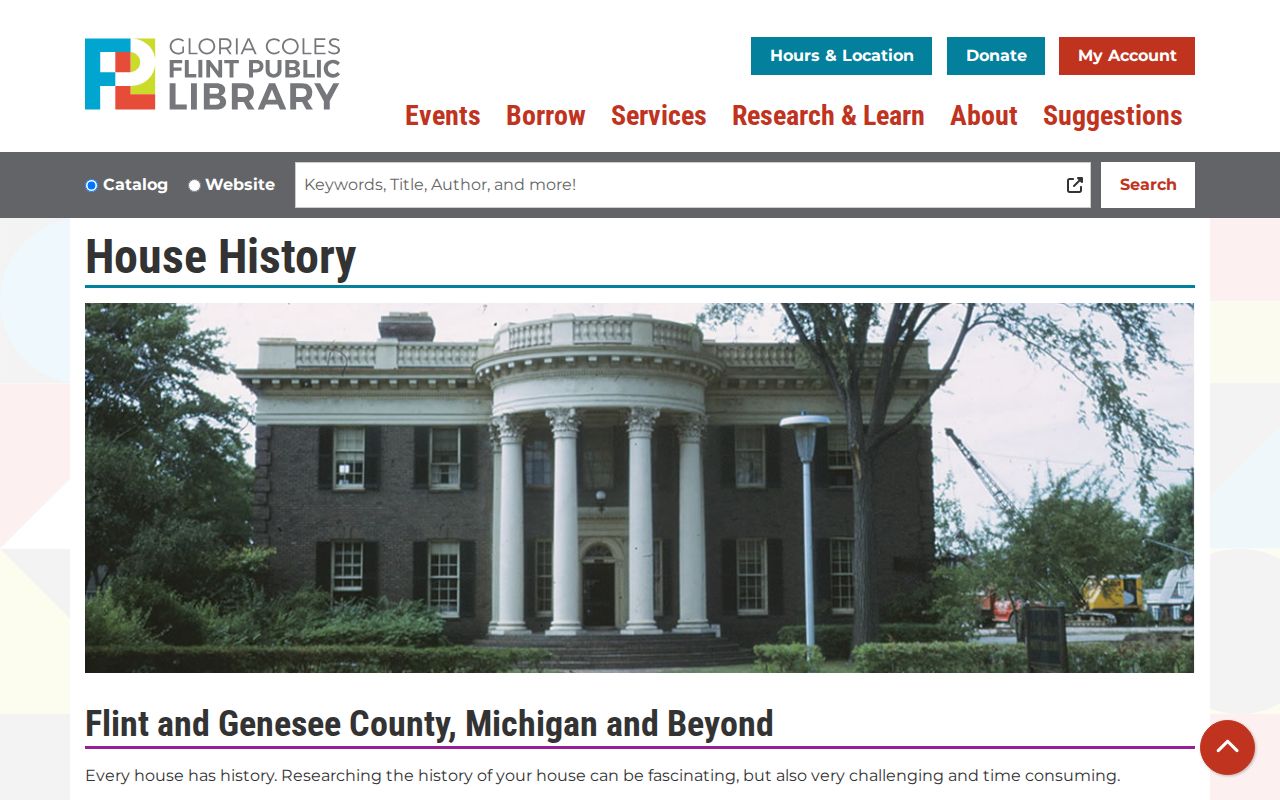
The Historic Homes Binder covers only selected homes. Its absence does not mean a Flint house has no history. Treasurer microfilm may support tax and parcel work, while original material is identified at the Perry Archives, Sloan Museum Buick Gallery, or Treasurer. Exact research-service fees were not located in the official sources, so ask staff before ordering help.
Flint Address Record Map Evidence
Sanborn maps help test the structure and street context behind previous residents research. The Library of Congress identifies Flint editions from 1886, 1892, 1898, 1902, 1909, and 1914. The March 1898 Flint item contains 18 sheets. The 1914 edition contains 102 sheets for the congested district. The maps show lots, building outlines, materials by color, street names, and pasted updates. They do not name every household.
Use a map beside the directory address and deed legal description. It may show why an old street form does not match a current parcel card or why the same lot has a changed structure. A comprehensive Flint street-renumbering or renaming schedule was not found in the inspected official sources. Bridge uncertain numbers with historic street maps, Sanborn labels, plats, a stable intersection, lot or block information, and adjacent addresses. Never silently replace an old number with a modern one.
Note: Map evidence places a structure and street, while household evidence comes from the directory, census, obituary, or probate trail.
Flint Previous Residents Household Trail
Ownership and residence are separate questions. Flint directories are arranged by name or address, and their address or criss-cross portions can help connect an address to a listing where a volume provides one. Follow the printed spelling, apartment or room detail, and any mark that the volume defines. Then pair the directory date with the right census window. Census microfilm at FPL begins with 1880 material, and releases follow the federal 72-year rule. The historical collections themselves are detailed on the Flint city directory page.
- Find the address in the nearest available Flint directory and record the entry exactly, including initials, spouse notation, and all abbreviations.
- Check the name section for an alternate spelling, business clue, or second address. Do not expand an abbreviation without that volume's key.
- Pair 1890s and early 1900s entries with census schedules, and pair the verified 1929 to 1932 directory run with the 1930 federal census.
- Use 1940, 1950, and later released federal schedules for a later household check. Keep city census and federal census labels distinct.
- Cross-check a departure with a deed, tax record, obituary, probate file, or newspaper notice rather than assigning one cause to a missing listing.
Lawful use. Use Flint house-history and previous-residents material for personal, lawful research. Respect sealed records and protected addresses, and never use an index to harass or track a living person.
Flint Previous Residents Endpoints
A Flint directory entry can stop because a person moved, died, changed a name, or was omitted in a given year. Search the Flint newspaper archive with an exact name, spouse, street, business clue, or funeral date, while allowing for OCR errors. FPL obituary and biography files may surface clippings not found in the digitized archive. Use an obituary as a lead, then verify a death event through the appropriate vital-record custodian when needed.
Probate records can add a personal representative, heir, property-disposition, petition, inventory, order, or case-date clue. Genesee County Probate Court keeps estate and related files, but sealed and confidential material is withheld. A full public statewide probate-name interface and complete online coverage range were not confirmed in the research. Request a case search or file copy from the court rather than assuming a web search will show the full file.
The Archives of Michigan county-guide directory leads to state archival context for Genesee records such as a 1927 Flint city census, assessment rolls, voter and poll-book material, cemetery files, military discharges, court records, and historical tax material.
The Archives county-guide route helps place Flint previous residents research in the right record group.
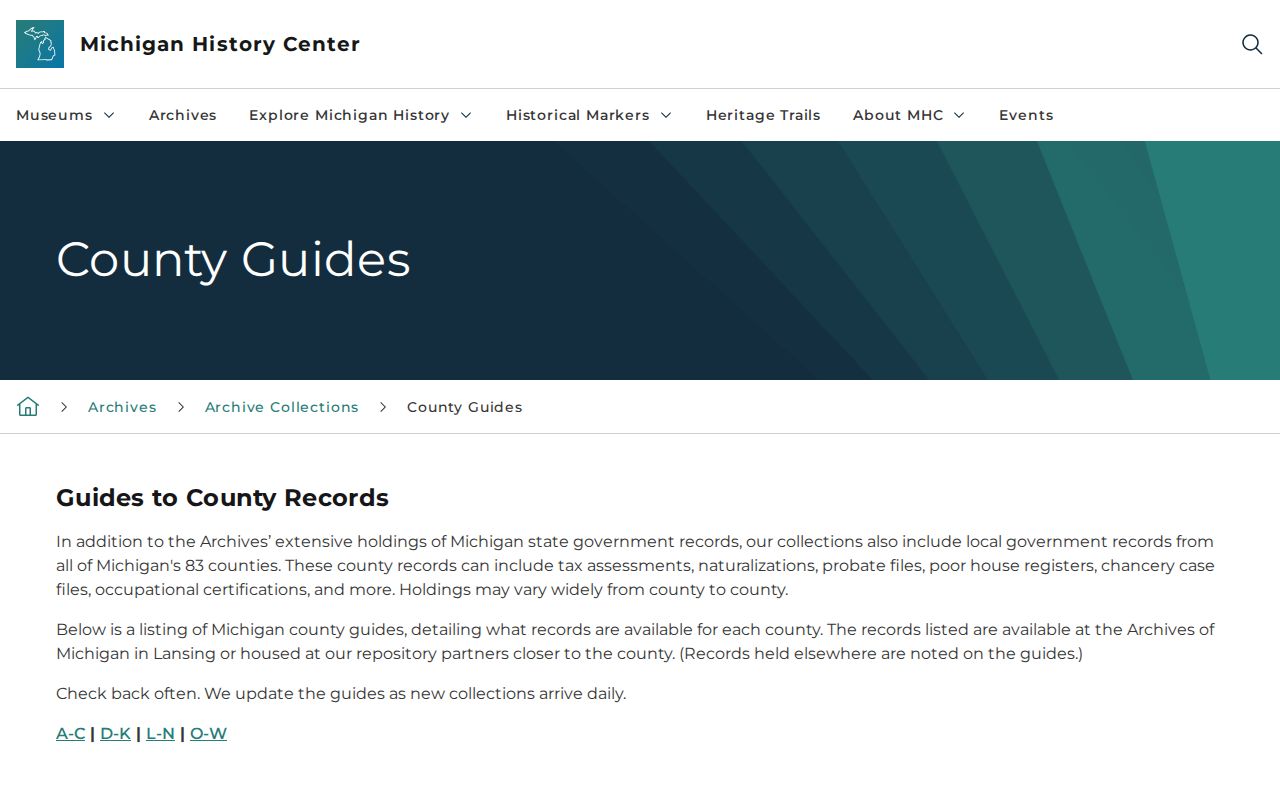
Archive guides are finding aids, not a claim that every Flint item is digitized. Contact the repository with a person, street, record type, and date range before planning a request.