
Finding Flint Resident Records
Start with the strongest detail already in hand. A current street address is best checked through the City of Flint property gateway or the Genesee parcel-history viewer. A name plus a rough date can lead to a recorded deed, a public court index, a permitted voter-record request, or an old directory entry. Each source answers a narrower question. A parcel card can connect an owner to land, while an old directory can place a household at an address when its volume was printed. Neither proves that every person at that address lives there today.
Keep a short research note as you go: the spelling searched, date range, source, record number, and any difference between a mailing and physical address. That makes a Flint residents directory search easier to repeat and guards against mixing two people with similar names. When one official source gives a lead, confirm it with a second source that records a different event.
- Search the Flint property route by address, owner name, or parcel, then save the situs address and parcel identifier.
- Open the Genesee parcel record to compare ownership history, deed references, map links, and the mailing-address field where available.
- Use the Register of Deeds party index for a recorded transfer, searching grantor and grantee names separately with an approximate year.
- For a person rather than a parcel, use MiCOURT, Michigan voter-record channels, and vital-record procedures only within their stated access limits.
- For an earlier household, ask Flint Public Library local-history staff for the right directory, map, newspaper, census, or microfilm source.
Flint Resident Records Offices
Flint is the Genesee County seat, but a search still branches by record type. The city assessor route handles Flint property information. The Register of Deeds records land instruments. The City Clerk handles city FOIA, elections, and licensing contacts. Courts and the county clerk keep their own files. Use the custodian that created the record, particularly when an online result needs a certified copy or a full file.
Genesee County Register of Deeds
324 S. Saginaw Street
Flint, MI 48502
(810) 257-3060
Flint City Clerk and Elections
1101 S. Saginaw Street, Room 201-C
Flint, MI 48502
(810) 766-7413
Flint Parcels Behind a Name
Flint's property-lookup gateway points to BS&A Online, and the county parcel-history viewer adds ownership history, deed references, and map/report/tax-map links. The portal guide also describes a Flint Property Portal search by address or parcel ID. A parcel is the identified piece of land; it is more stable than a street number when an older record uses a lot or legal description instead.
The assessor record can distinguish the situs address, meaning the physical parcel, from the mailing address used for tax correspondence. It may show an assessed owner, values, property condition, and tax-map information. It does not establish every occupant. Use the owner field as a lead to a deed or directory, then date each result.
- Parcel
- A defined piece of land used as the stable key for property research.
- Situs address
- The physical street address of the parcel, which can differ from the tax mailing address.
- Index
- A searchable list that points to a record, not necessarily the record image or full file.
- Resident roll
- A source that records one specific connection to a place, such as ownership or registration, rather than every household member.
The BS&A destination is the city's current-property route. Its Flint fields were gated during research, so exact live labels should be checked in the browser.
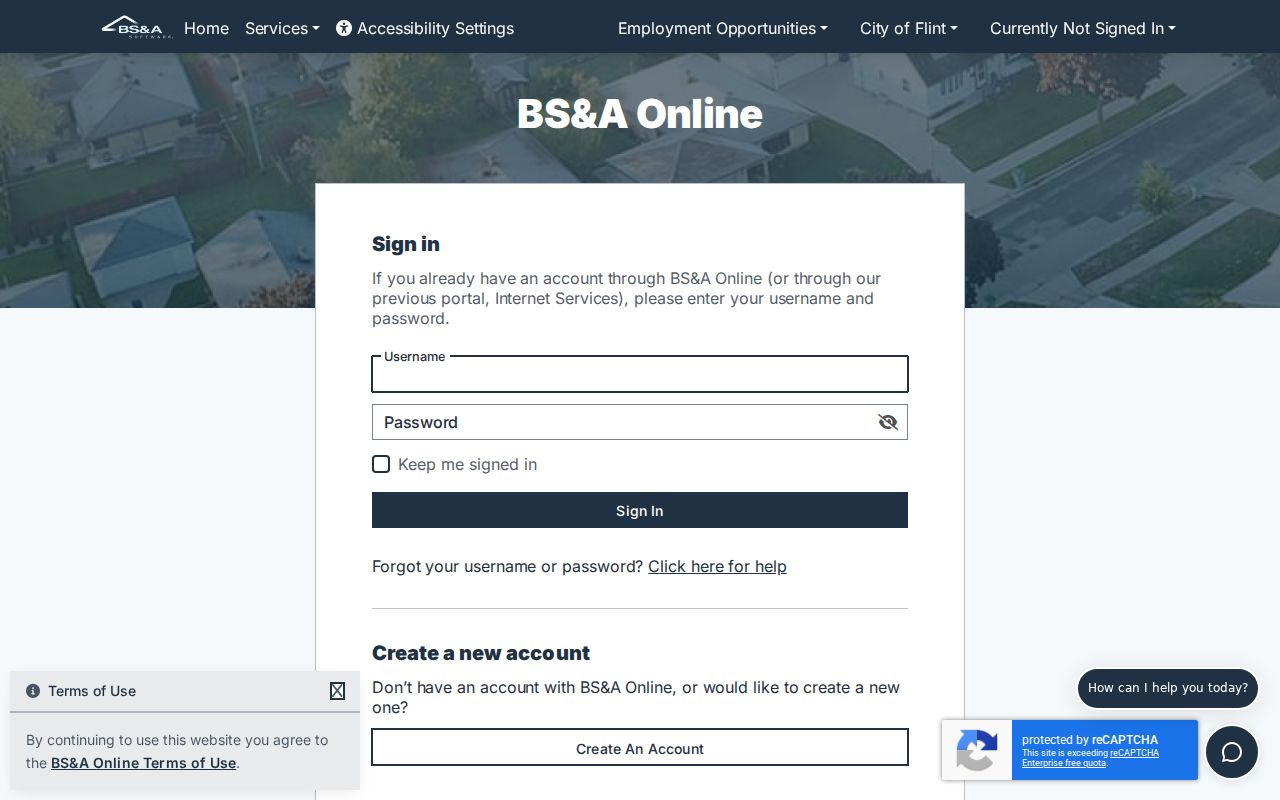
The gateway image is a useful reminder to begin with the city link when an address needs a current parcel check.
Flint Deeds and Old Indexes
The county's recent-record search is the public trail for recorded deeds, mortgages, liens, plats, and related instruments. Search party names and an approximate year, then preserve the document number or liber and page. A grantor transfers an interest; a grantee receives one. Those roles can be searched separately when a household or parcel changes hands.
Online coverage needs care. The search page says records before 1983 are not accessible online, while the office FAQ describes the ordinary index as documents recorded since 1985. Treat 1983 and 1984 as dates to test, not proof that an instrument is absent. The historical-book path, free public terminals, counter research, mail requests, Flint Public Library microfilm, and archives are the documented alternatives. Office research reaches back to the 1800s.
| Genesee deed-index field | How it helps a Flint search |
|---|---|
| Party name | Search a last name with first-name or initial variants, separately by grantor and grantee. |
| Year and first letter | Narrow the historical book path before opening image navigation. |
| Book type | Use the guide’s DE, DEGR, DEGE, or MTG labels when the matching historical index calls for one. |
| Document number or liber/page | Preserve the pointer needed for a counter, mail, terminal, or image follow-up. |
| Parcel or street address | Use when indexed, while recognizing older instruments may be keyed more reliably by legal description. |
Flint's FOIA page is the correct fallback for city-held records that do not have a public index. A narrow request should identify the record type, address or person, date range, and desired fields.
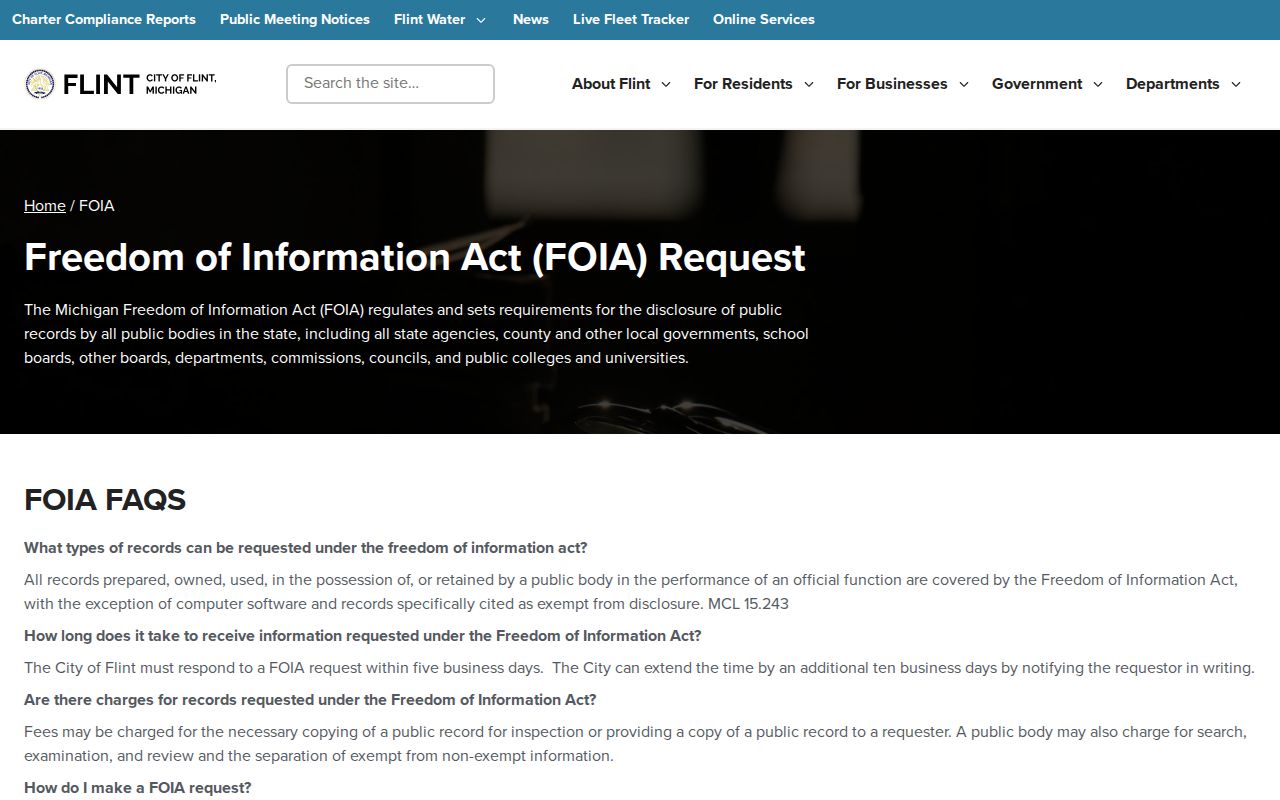
The City FOIA instructions show the written-request route that supplements a web search when a record is held but not posted.
Flint Voter Records, Carefully
Michigan voter-registration records have a public and protected-field split. The Secretary of State's elections guidance explains that voter information is available through FOIA, but it does not make a casual address list. Driver-license or state-ID numbers, phone numbers, full birth dates, signatures, and the last four Social Security digits are protected. Protected-address records can also be withheld or substituted.
The Michigan Voter Information Center is a personal registration and polling-place service, with name, birth-month/year, and ZIP fields. It is not a public bulk roster. A person seeking permitted public QVF fields should use the formal records route and limit geography and fields to the need at hand.
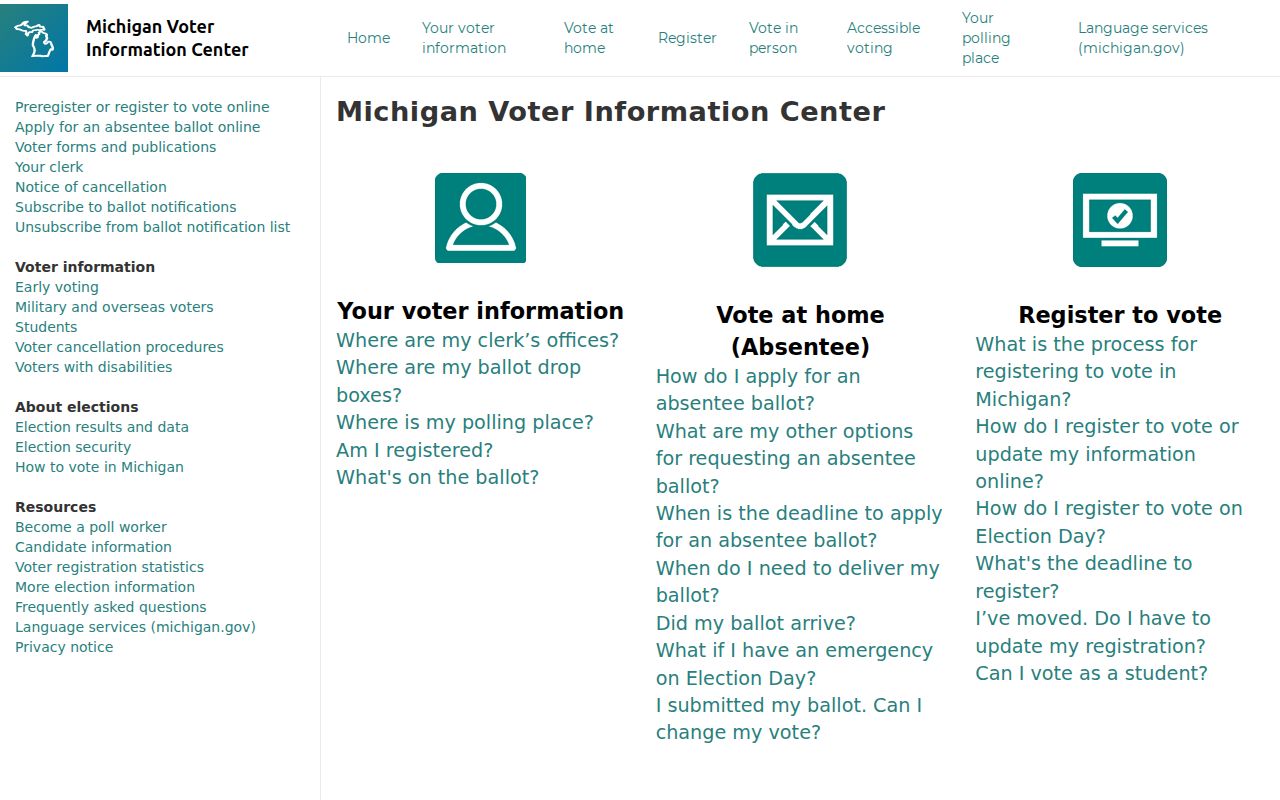
The voter-information form illustrates the state’s controlled, self-service lookup rather than an unrestricted Flint household search.
Note: A voter match can support a dated civic-record lead, but it never reveals a ballot choice or confirms every adult at an address.
Current Flint Resident Directories
No official source is a complete Flint household list. The useful current sources are records that document a relationship to property, civic registration, a court case, a credential, or a city office. A strong Flint residents directory search asks what relationship is actually recorded, then names the source and date. The table separates the coverage of each record so a result is not overread.
| Flint record source | Recorded connection | Custodian | How to reach it |
|---|---|---|---|
| Property or parcel card | Owner, parcel, situs or mailing clue | Flint assessor, BS&A, Genesee PHD | City gateway, public viewer, counter or FOIA |
| Recorded-instrument index | Grantor, grantee, transfer date, document reference | Register of Deeds | Recent web index; historical books, terminal, mail, counter |
| Voter record | Permitted registration and precinct information | Michigan elections offices | Personal lookup or controlled QVF/FOIA path |
| Public court index | Party role, case number, filing and status data | Michigan courts and local clerks | MiCOURT plus the file custodian |
| City staff directory | Published office contact, title, department | City of Flint | Online name-or-title search, not a resident index |
When the goal is to confirm a single name across records, the Flint resident lookup route keeps the name, date, role, and address distinctions in one workflow. For a whole street, use the parcel-based path instead.
| Official Flint record route | Generic commercial search category |
|---|---|
| Names a custodian, record date, access rule, and source-specific field. | May combine public and purchased information with an uncertain update date. |
| Supports a request for a document, certified copy, or correction from the office that holds it. | Does not replace the local file, court record, deed image, or certified vital copy. |
| Shows the scope of a parcel, voter, court, or directory record. | Can merge similar names or repeat an old address without explaining its source. |
Flint Court Names and Case Numbers
Michigan MiCOURT Case Search lets a user select one court at a time. For Flint matters, the relevant custodians can include the 67th District Court, 7th Circuit Court, and Genesee County Probate Court. The public name search uses a required last or business name, optional first and middle names, and optional birth year. Case-number searching uses year, number, and type. A court result is an index lead, not the full case file.
Public result fields can include court location, case type and number, filing date, status, disposition, prosecutor, or police agency. Sealed, restricted, juvenile, and other nonpublic matters may not appear. A matching name should be checked against a party role, date, court, and local-file record before it is treated as the same person.
MiCOURT’s public search is shown in the recorded interface image below.
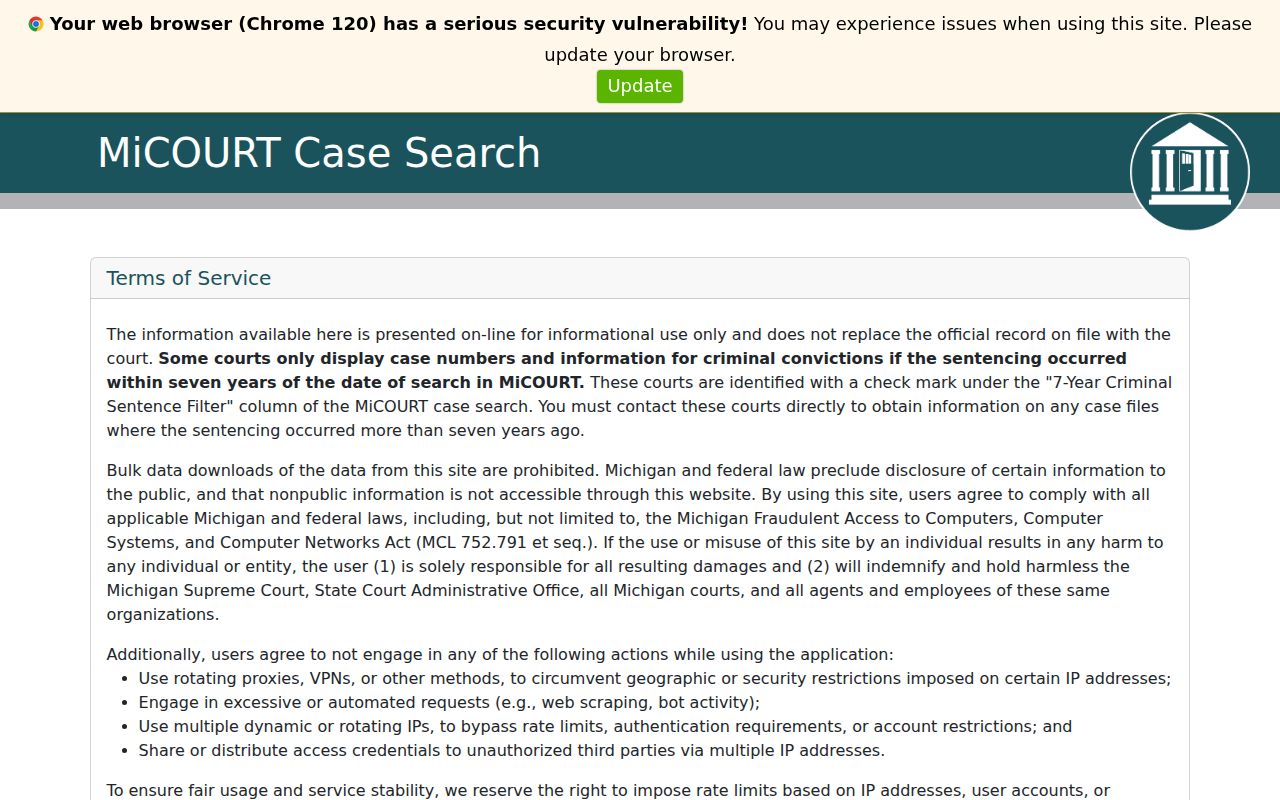
Use the search result to obtain a case lead, then contact the listed court for documents or local access rules.
Flint Vital Record Routes
Michigan Vital Records offers statewide channels for births, deaths, marriages, and divorces, while the Genesee County Clerk/Register provides local certified-copy procedures. Michigan events begin in 1867. Birth records are generally restricted under MCL 333.2882, although the state identifies records more than 100 years old as unrestricted. Death, marriage, and divorce records do not carry the same relationship restriction on the state order page, but every certified copy still follows its custodian’s procedure.
The state describes online, mail, phone, drop-box, appointment, and will-call channels. The county’s local form has event-specific fields and asks requesters to verify its current fee. For archival work, MCL 333.2885 sets transfer thresholds of 110 years for births and 75 years for deaths, marriages, and divorces unless sealed. A record can confirm an event or relationship, but it should not be used to expose protected details.
The state order page shows the official access routes and eligibility information.
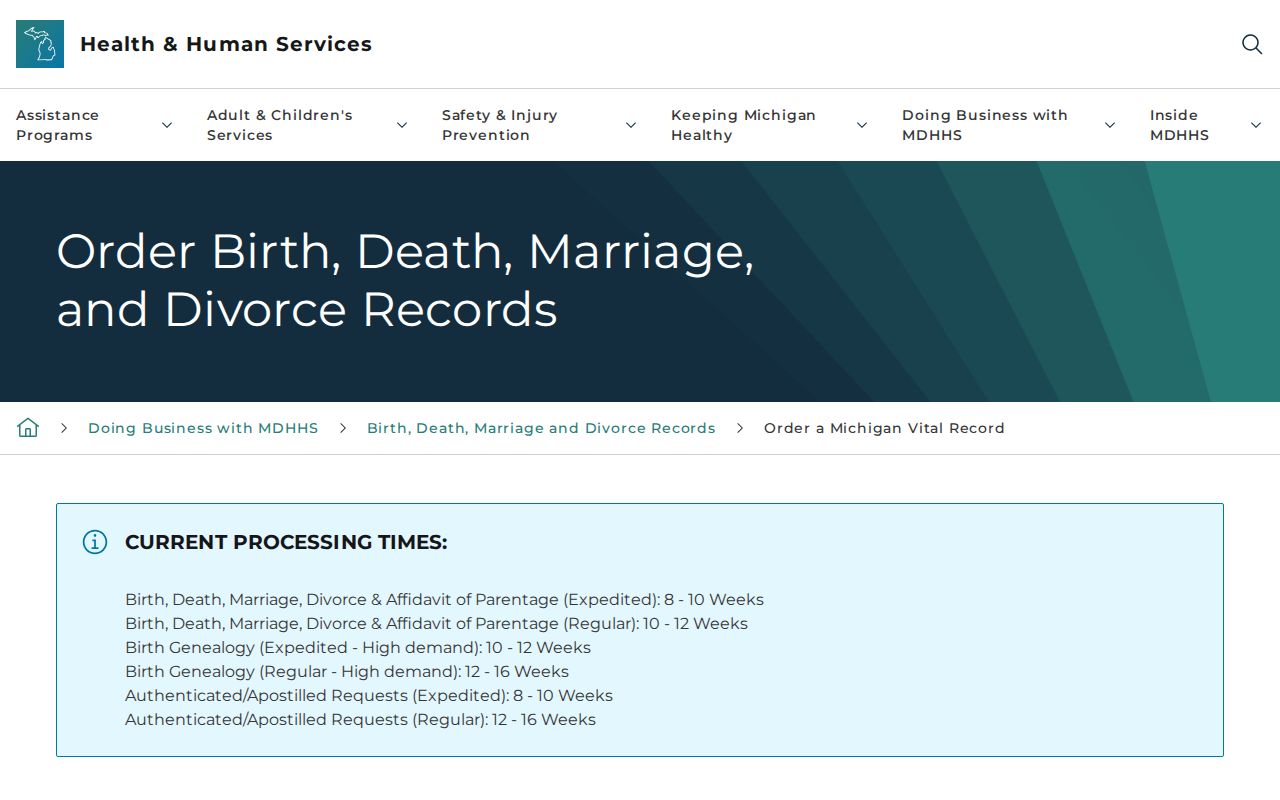
The order screen connects a Flint family-history lead to the appropriate Michigan vital-record channel.
Flint Requests When No Index Exists
Some useful city-held records do not have a public search screen. Flint Building & Safety lists permit services, but research did not locate a public address-index for permits. The City Clerk’s licensing division handles business-license procedures without a public searchable register. Ask for an existing record by address, record type, date range, and fields, rather than asking an office to decide who lives somewhere.
Michigan Freedom of Information Act, MCL 15.231 et seq., gives a written-request path. Under MCL 15.235, a public body generally responds within five business days and may take one written extension of up to ten business days. Copying, searching, examination, review, separation, and mailing charges can apply. Precise requests reduce the time and fee estimate.
Flint’s NextRequest portal is the online submission alternative to a written request to the City Department of Law.
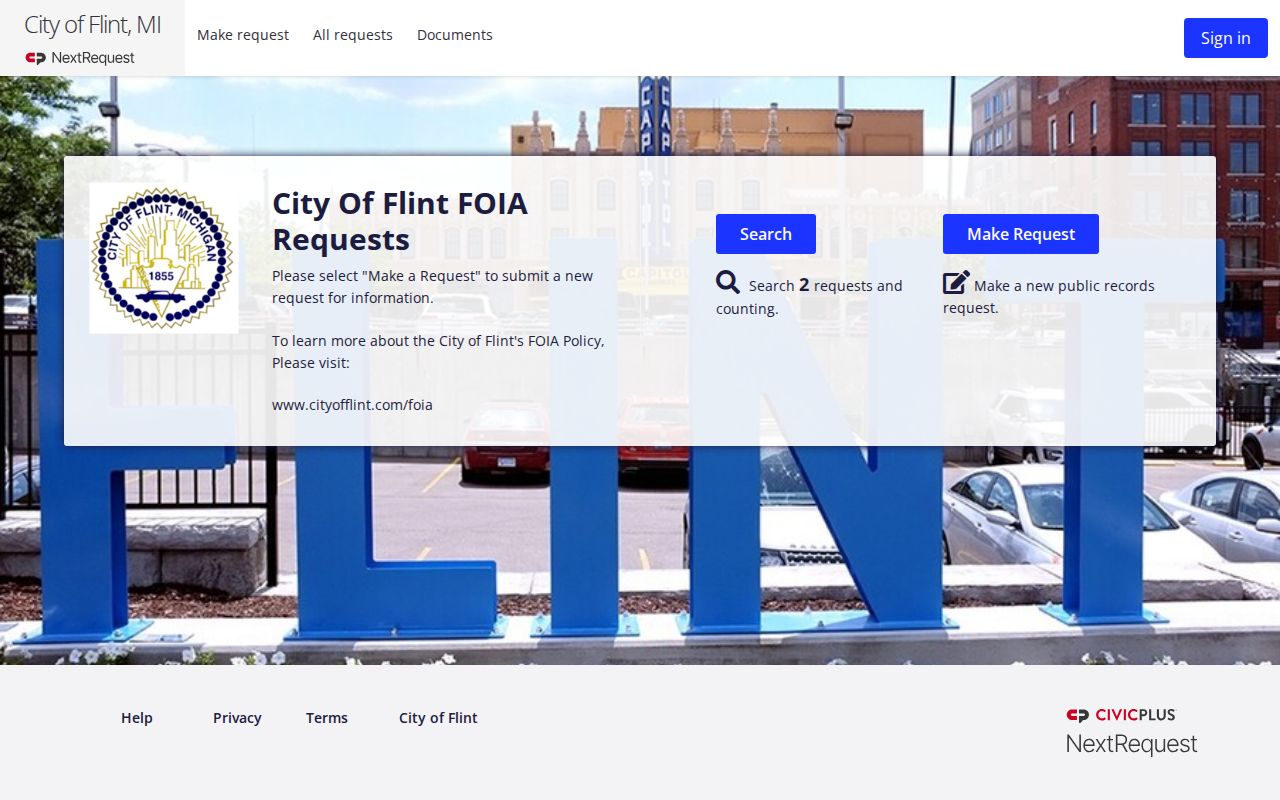
The portal supports a focused records request when a Flint agency keeps material that is not published as an index.
Flint Civic Office Contacts
The Flint City Clerk page identifies administration, election, and licensing divisions, while the city’s online staff directory searches by name or title with a three-character minimum. Those tools are useful for locating the assessor, clerk, planning contact, Building & Safety, or licensing office. They are office-contact resources, not evidence that an employee lives in Flint.
Flint election resources publish precinct and ward material and describe official election records. The public-notices stream can supply current civic documents, but it is not a directory of residents.
The City of Flint staff directory makes it easier to find the right custodian before calling or submitting a request.
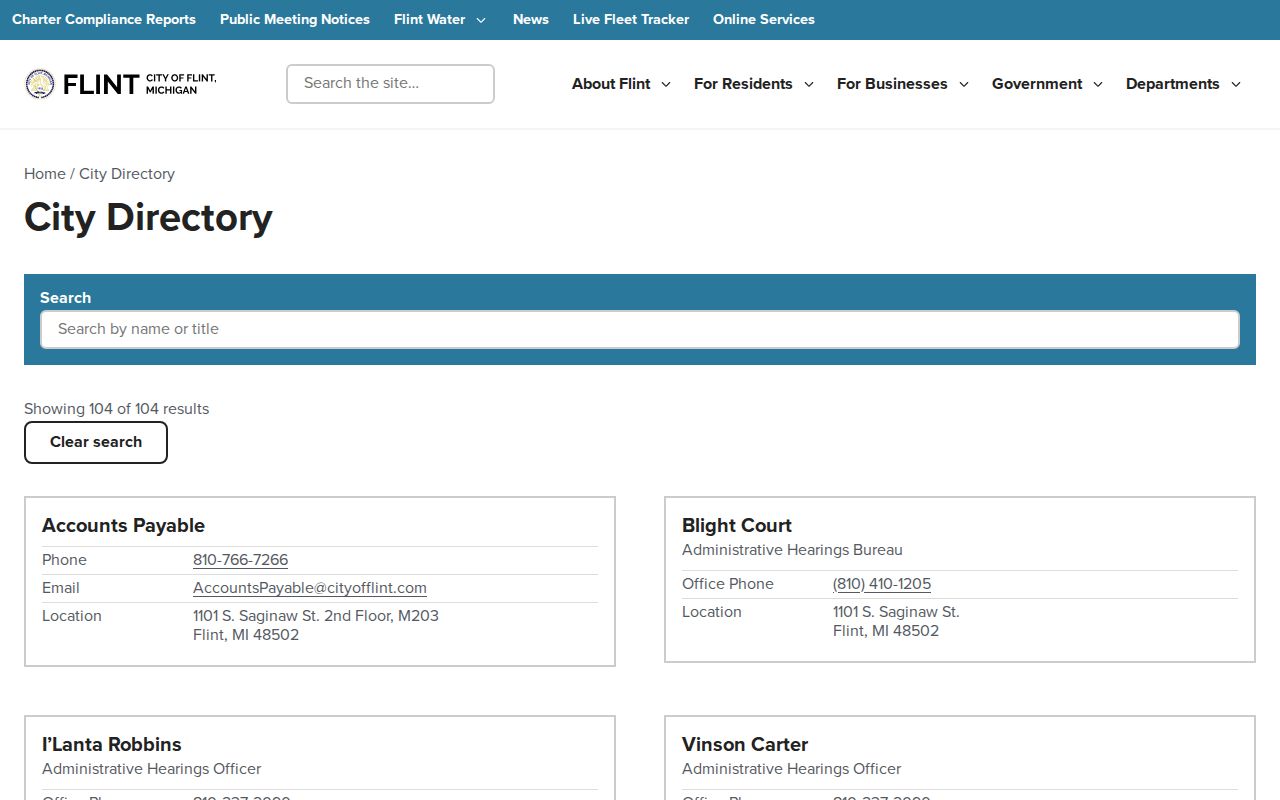
Use office contact details to reach the person responsible for records, not to make a claim about an individual’s residence.
The election division page provides Flint precinct and ward information.
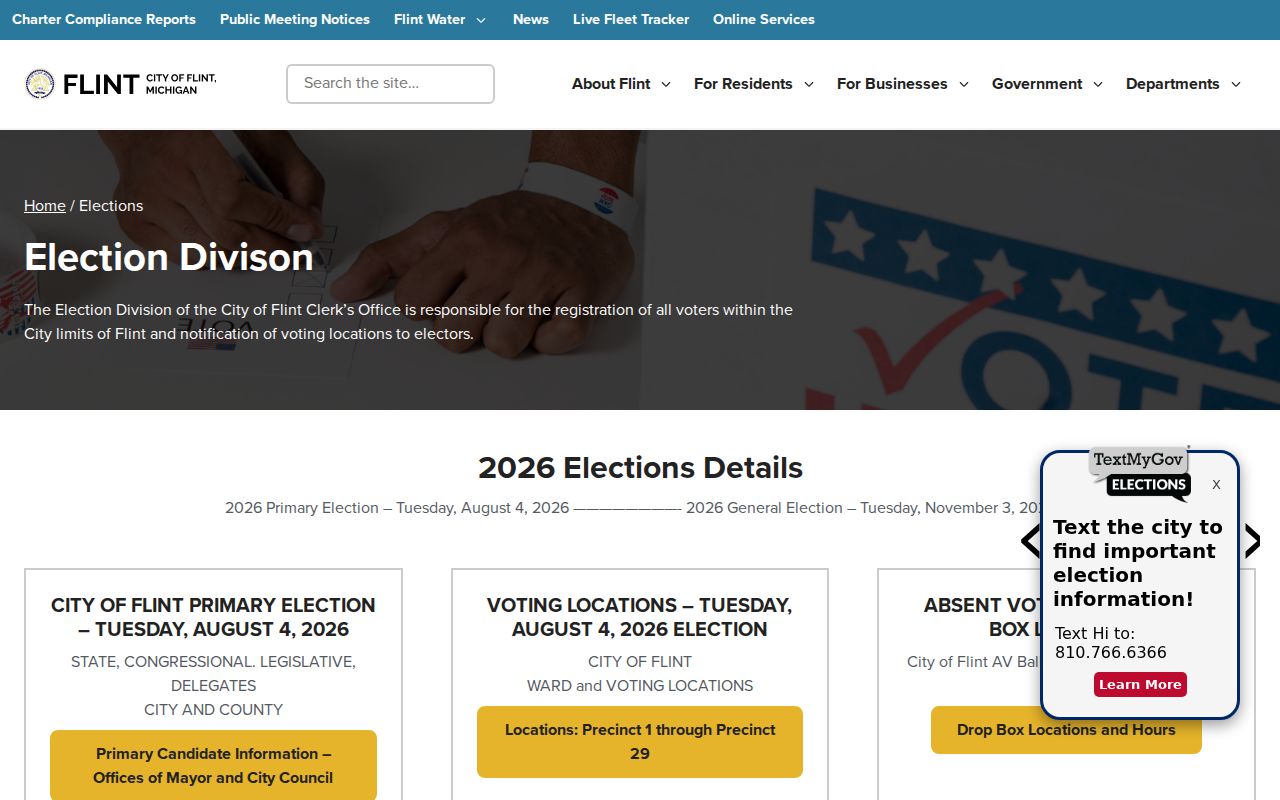
Election materials establish civic geography and record access rather than household membership.
Historical Flint Resident Directories
Flint Public Library’s house-history guidance identifies R.L. Polk and Company directories for Flint and surrounding communities from the 1890s to the present day in its broad collection description. Catalog leads include 1885, 1888–89, 1892–93, Mills volumes from 1894 and 1897–99, a verified NARA reference for 1929–32, and later examples through 1945. Those are leads, not a promise that every intervening volume is available. Ask the local-history room to verify a specific year and volume.
A directory entry can contain a name, initials, address, occupation, spouse notation, business listing, or an occupancy mark, depending on the volume. Its address pages or reverse sections can make a former household traceable from a house rather than a name. The fuller Flint city directory collection path explains how to read those volumes with census, newspaper, map, and deed evidence.
Flint Library and Archive Trails
Flint Public Library’s Local History and Genealogy Room is on the lower level and focuses on Flint, Genesee County, and Michigan. It has local newspapers, directories, census microfilm, scanners, microfilm readers, onsite Ancestry Library Edition, staff assistance, a 30-minute Book an Expert option, and request-based Special Collections access. Its collection began with a 1905 DAR gift and is described by the library as Michigan’s second-largest open-stack genealogy collection.
For records beyond the local shelf, a university archive, the Genesee County Historical Society’s Ask Archivist route, and the Archives of Michigan county guide can provide a historical source when a modern Flint resident record ends. Item restrictions and availability still need confirmation.
The Flint City Clerk page also identifies the public-records and election contacts that connect a local question to the proper office.
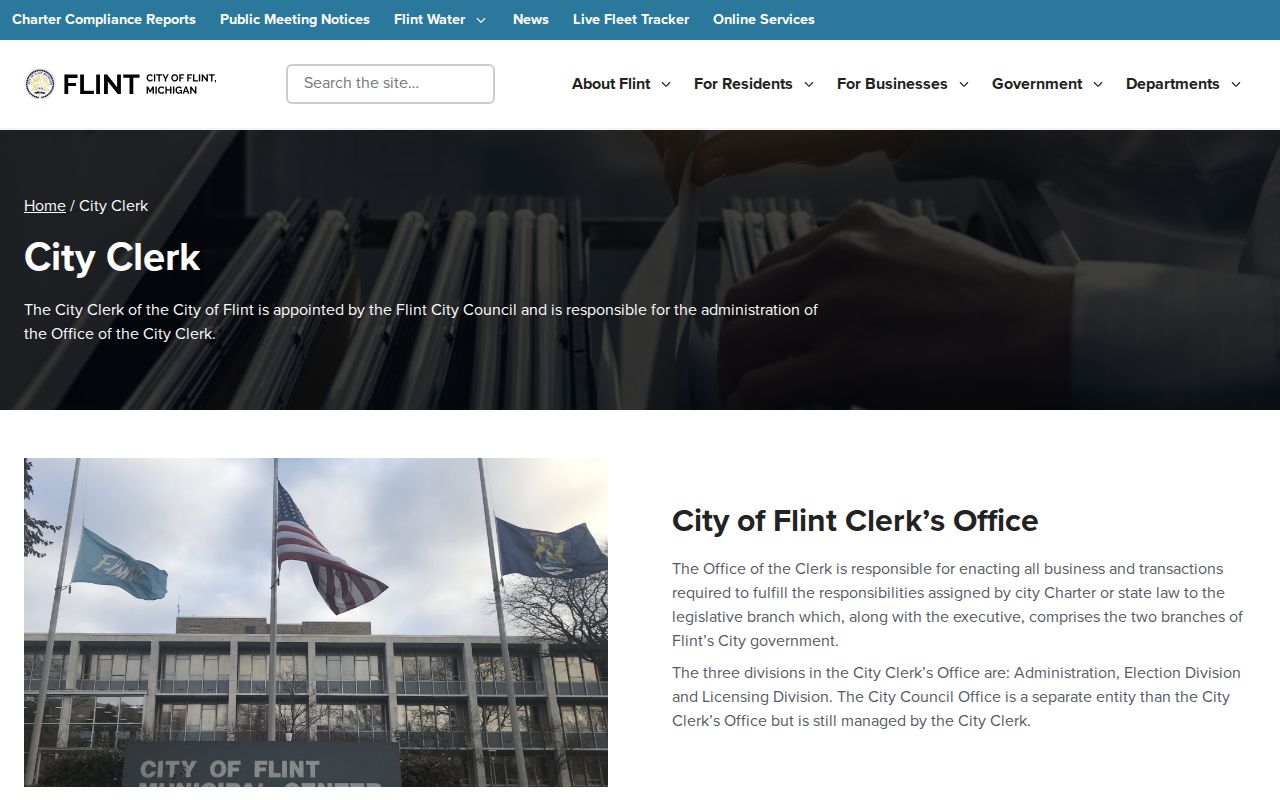
The City Clerk information helps separate municipal records from county deeds and library collections.
Flint ZIP Labels and Boundaries
A Flint mailing ZIP is delivery geography, not proof of city jurisdiction. The USPS ZIP Lookup checks an address, a city and state, or a ZIP and city label. Flint-area labels include central city ZIPs and outer labels that can cross into Burton or Grand Blanc context. Check the Genesee municipality field and parcel map when the question concerns the City of Flint rather than a mailing address.
The Flint Property Portal can use ZIP, ward, census tract, and other boundaries for property information. That output is a parcel dataset, not a people list. Historic directory entries also predate ZIP codes, so keep the printed address and add a modern ZIP only as a cross-reference.
Note: A ZIP result verifies a postal assignment, not a person’s connection to the address or a parcel’s municipal status.
Flint Protected Address Limits
Michigan’s Address Confidentiality Program provides qualifying participants with a substitute address and mail forwarding for designated agency use. Voter, court, vital, and motor-vehicle records also have legal limits. The Attorney General’s program guidance explains that the protection is not a general removal from every public record, but it is a reason that a public search may not show a residential address.
Official records are appropriate for personal, lawful research such as family history, estate work, reconnecting, or checking a public document. Do not use them to stalk, harass, threaten, or harm anyone. When a record is wrong or incomplete, contact its custodian with the document number, date, and supporting evidence instead of treating an online listing as final.
Lawful use. Flint public-record research can support a personal records question, but it must never be used to track, intimidate, or expose a protected person.
Michigan’s voter-record explanation shows the distinction between public registration information and protected identifiers.
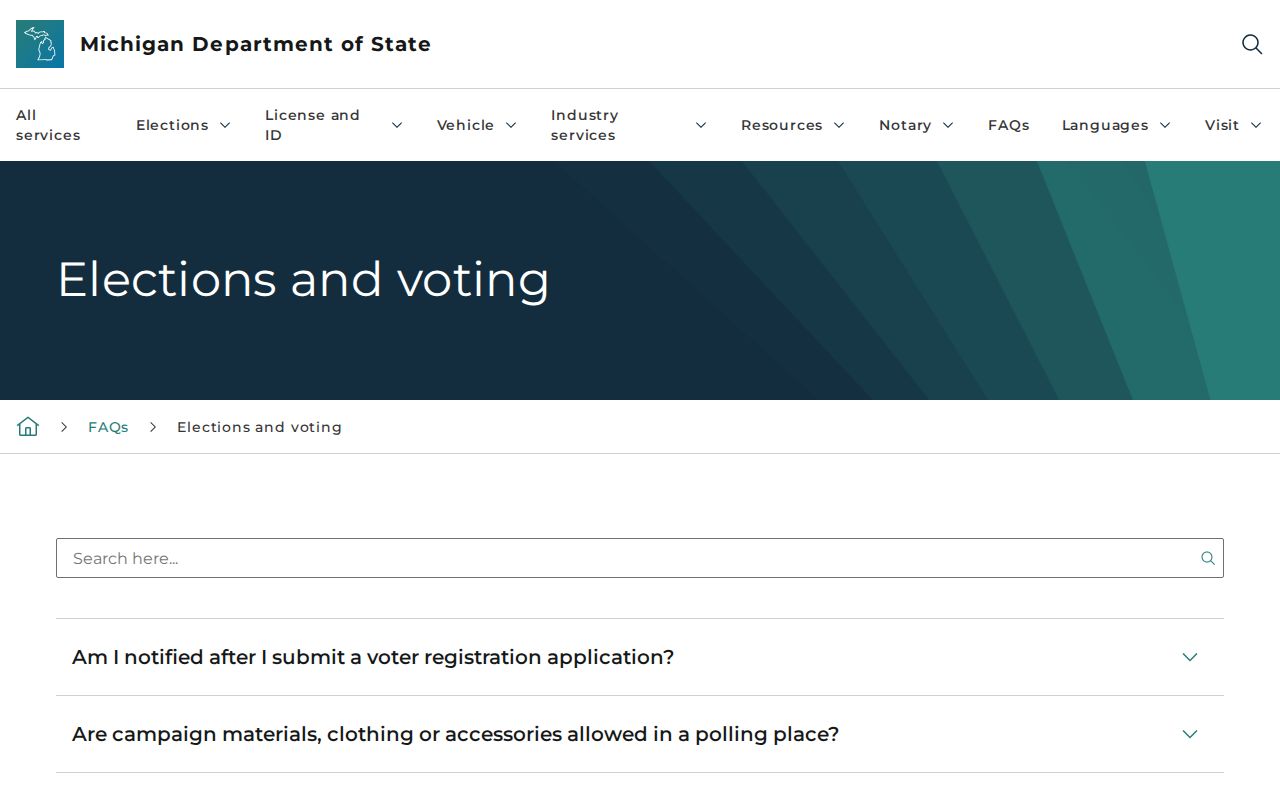
The guidance reinforces that a public voter record is not a license to obtain sensitive or confidential fields.